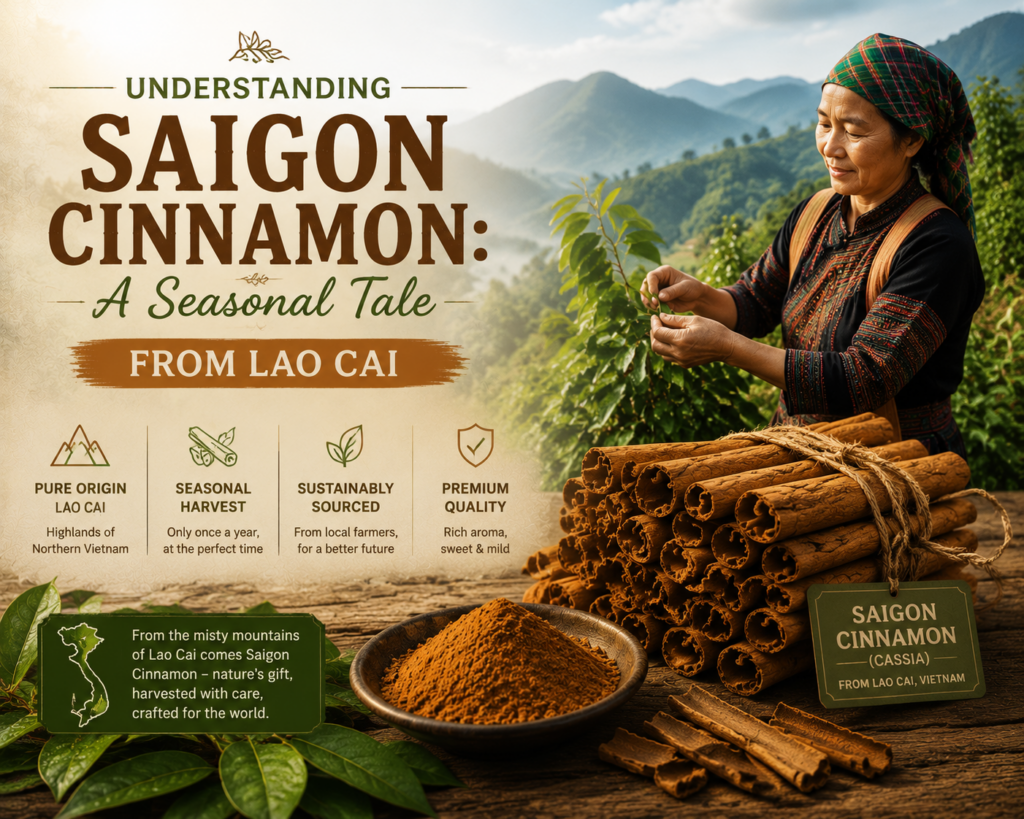
The air is thick with anticipation and the earthy scent of sunshine-touched bark. Right now, farmers, myself included, are bustling across the cinnamon forests of Xuan Ai, preparing for the autumn harvest. You know, this is when our cinnamon trees yield their highest oil content, a secret I didn’t fully appreciate until I was knee-deep in this rich soil. But enough about me. I’m here to give you a glimpse of what is Saigon cinnamon and why this season matters so much.
Why Is Autumn Harvest Season So Special?
It’s a time of transformation in Lao Cai. The mountain breezes grow cooler, crisp, as if nature is whispering reminders of the treasures beneath its canopy. Autumn means the cinnamon bark, the soul of what we know as Saigon cinnamon, is ready to reveal its peak richness. Each layer of bark tells a story, nurtured over years, capturing the essence of our mountainous terrain. But what truly makes this time unique is the oil content. You see, between August and September, our bark has the highest oil concentration, making it the most potent and fragrant.
What Is Saigon Cinnamon?
Ah, the big question! Saigon cinnamon, also known as Vietnamese cinnamon, is renowned for its sweet and robust flavor. Unlike its counterparts from around the world, it stands out with a higher oil content, often reaching that magical 3-5% range. That’s right, when we say rich, we mean it. And once you’ve tasted it, there’s really no going back. It’s more than a spice; it’s a testament to our history and a link to our ancestors, the Dao ethnic people, who first planted these slopes.
How Do We Harvest Saigon Cinnamon?
Well, let me paint you a picture. Imagine a team of folks wielding curved knives, carefully peeling back the bark to spare the living tree beneath. This process, though laborious, ensures that nothing goes to waste. We sun-dry the harvested bark on bamboo racks for 3-7 days, letting the sun do its magic. During this time, every day feels like a step in a delicate dance, balancing tradition and precision. The branches and leaves aren’t neglected either. From oils to powders, every part of the cinnamon tree finds its purpose.
5 Ways Our Climate Shapes Saigon Cinnamon
- Altitude’s Role: Our cinnamon thrives between 200-1000 meters. The altitude offers the right coolness and humidity.
- Rich Soil: Volcanic and mineral-rich soils lay the perfect foundation for our cinnamon trees.
- Seasonal Variations: From the intense summer sun to autumn’s sharp embrace, each season enhances distinctive flavors.
- Spring Softness: A spring harvest offers a milder spice compared to autumn’s boldness.
- Rain’s Influence: Just the right amount keeps the soil moist and the bark vibrant.
From Our Trees to Your Table: The Farmers’ Role
What’s happening in Lao Cai right now, you might wonder? Busy hands, dedicated hearts. Farmers are stationed at various points across the cinnamon groves, each one of us deeply connected to this cycle. We sell direct, ensuring no middlemen cut into the fruits of our labor. What you’re getting is as fresh as it is genuine. A piece of our land and a slice of our lives.
If you’re curious about the difference this makes, I invite you to explore our Vietnamese cinnamon and learn more about our story. Here’s where I watch our cinnamon go from bark to spice, a transformation that never ceases to amaze me. Understanding what is Saigon cinnamon involves not just knowing its definition, but feeling its roots, its season, and its soul.