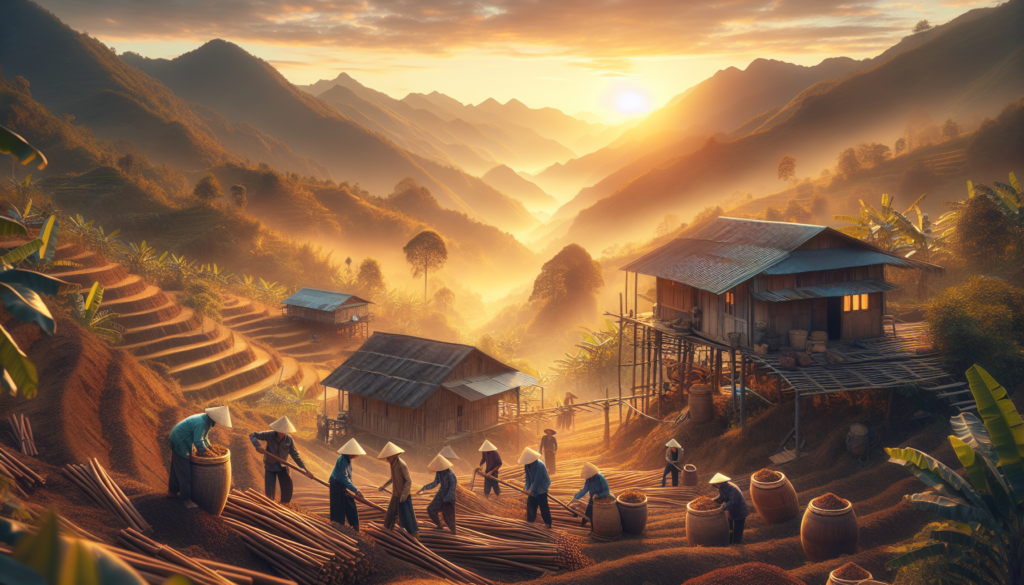
As I step into our cinnamon forest this morning, a gentle mist wraps around us, hinting at the specially crisp feel of autumn here in Lao Cai. The air is filled with anticipation. Right now, our trees are ready to reveal their treasures, and I want to share the vibrant tapestry of how cinnamon is harvested amidst this timeless landscape.
Why Autumn is the Best Time for Harvest
This time of year is special. Autumn in Lao Cai means a more potent cinnamon harvest. The bark yields higher oil content during the late summer and early autumn months, specifically August and September. The cooler climate and fertile soil at an altitude between 200 to 1000 meters contribute to this richness. The mountains, after all, have gifted us with an environment that nurtures nature’s sweet bounty.
Farmers in our village are busy with the harvest. You’ll see them skillfully wielding curved knives to peel the bark, their movements graceful and practiced. The bark peels away, revealing the rich cinnamon color — a sight to see. We then lay them out carefully on bamboo racks, letting the sun dry them for three to seven days. This careful curing process enhances both the quality and aroma of the cinnamon.
How to Harvest Cinnamon: A Step-by-Step Guide
So, how is cinnamon harvested, exactly? Let me walk you through the steps. First, we look for trees that are between 8 to 10 years old. That’s when the bark is at its finest, though trees from 15 to 25 years offer the peak quality and oil content. We start by cutting parallel incisions on the bark and gently peel it away. It’s crucial to handle the bark delicately to ensure its quality is maintained. Next, as mentioned, the bark is sun-dried, which intensifies its flavor and aroma. Nothing goes to waste here — trunk bark becomes cinnamon sticks, branch bark is split, and any scraps are ground into powder. Even the leaves are distilled for essential oils.
The weather plays a vital role here. The sun needs to shine just enough, allowing the bark to dry without losing its inherent moisture too rapidly. A delicate balance. That’s why we’re particularly thankful when the skies grant us clear, sunny days amidst the typical mountain chill.
What’s Happening Right Now on Our Farm?
As you read this, families are gathered in the grove, sharing stories as they work. It’s not just harvesting; it’s an event that resonates with tradition and community spirit. These traditions go back to the Dao ethnic people, who were the first to plant cinnamon in our region nearly 200 years ago. The cycle of growing and harvesting cinnamon is more than a livelihood — it’s our way of honoring their legacy.
Even the younger generations, like myself, are here, learning from our elders with every cut and every peel. We understand the importance of passing on these skills and knowledge. That’s why at Vietnam Cassia, we sell our products directly, ensuring that the farmers receive a fair price for their hard work. No middlemen, just our Vietnamese cinnamon reaching to you.
5 Reasons Our Harvest is Special
- Rich History: Nearly 200 years of cinnamon farming rooted in Xuan Ai Commune.
- Organic Practices: With over 2,000 hectares certified organic, our methods prioritize sustainability.
- Climate Advantage: The mountainous terrain and unique weather make for a superior product.
- Community Spirit: Harvesting is a shared community activity, preserving traditional practices.
- Direct Trade: We ensure fair trade without middlemen, connecting our roots directly to you.
Wrapping Up: How is Cinnamon Harvested?
The harvest season is a time of magic and hard work coming together. In Xuan Ai, as we gather the cinnamon, we’re reminded of why it’s called the ‘happiness tree’. Every piece we harvest is a testament to our dedication and the richness of our land. Want to experience it yourself? Read more about our story and discover the true essence of our green gold. As the sun sets over our cinnamon fields, I am reminded once more that this is not merely a task — it is a tradition, a community, and a legacy rolled into the harvesting of cinnamon.