

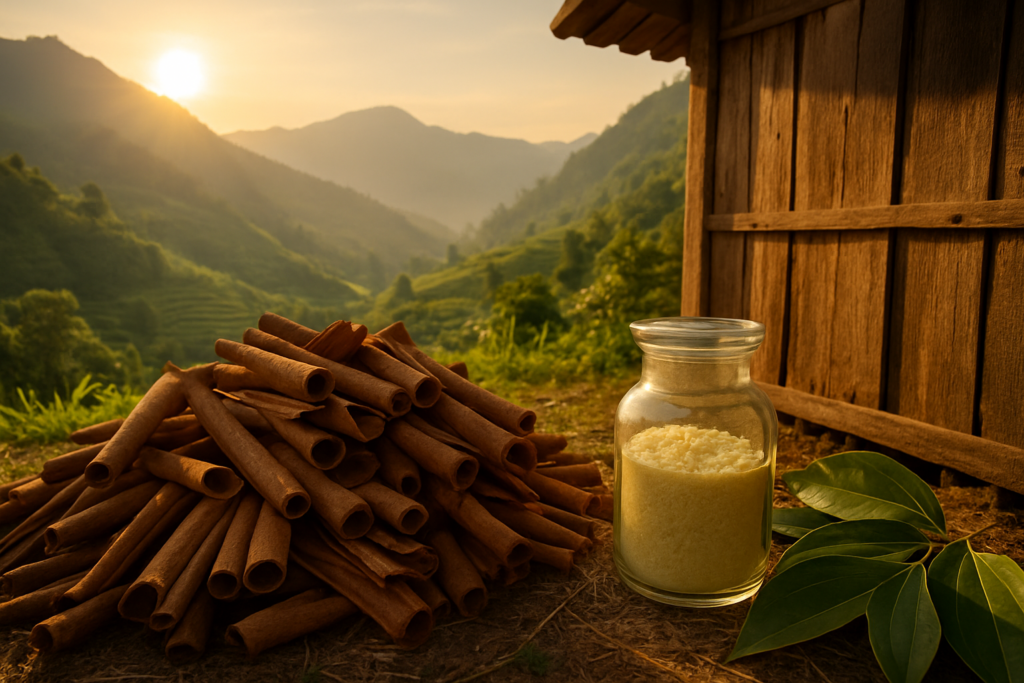
The hum of activity. That’s what fills the air these days on the farm. Harvest time. August in Lao Cai. Our cinnamon trees, sun-dappled, stand proud, waiting for skilled hands to peel their bark. It’s that time of year when curiosity peaks, and questions bubble up — like “what is coumarin?” Well, let me tell you a little more about it, as it’s intertwined with our cinnamon’s journey.
What is Coumarin in Cinnamon?
So, what exactly is coumarin? It’s a naturally occurring compound found in various plants, including our beloved cinnamon. Not just any cinnamon though. The variety matters. Cassia cinnamon, the kind we nurture here in Xuan Ai, is known for having higher levels of coumarin compared to its Ceylon cousin. It lends that distinct aroma and flavor that cinnamon lovers crave, but there’s more to the story.
How Coumarin Connects to Our Season
Right now, the weather dictates our days. We’re into the late summer harvest. August and September here mean crisp mornings and sunlit afternoons. Perfect for sun-drying our cinnamon barks. It’s during these months that the bark is richest in oil, along with higher coumarin levels. This impacts the aroma and quality of our Vietnamese Cassia Sticks, making this season extra special for us.
5 Ways Coumarin Affects Flavor
1. Aroma Intensity: Nice and strong, just the way many prefer it.
2. Flavor Depth: Adds a bit of complexity to dishes.
3. Preservation: Coumarin’s properties help keep the cinnamon fresh longer.
4. Color: A deeper hue in the final product.
5. Quality Indicator: More coumarin often means more of that classic cinnamon scent.
Difference Between Cassia and Ceylon
There’s often a bit of confusion here. Cassia, which we grow, contains more coumarin than Ceylon. Some folks worry about it, but I won’t pretend I knew this when I started. It’s a balance, like many things in life. The right amount of coumarin adds rich, spicy notes, making our Vietnamese Cassia stand out in the culinary world.
Responsible Farming: A How-To Guide
We take pride in farming responsibly. From planting in the cool, rich soils of the mountains at altitudes between 200 to 1000 meters, to carefully selecting the harvest window. Farmers in Lao Cai, including myself, are meticulous about timing. We harvest the bark when oil content peaks, ensuring both quality and sustainability. Every piece from the trunk to the scraps is used, minimizing waste and respecting the land.
If you visit us in Xuan Ai, you’d see firsthand the symbiosis of tradition and nature. From the moment we plant a sapling, nurture it, and finally harvest it years later. Each process enriched by the mountain air and seasoned by cultural knowledge passed down through generations. The Dao ethnic people, the original planters, knew this long before it was trendy. I guess that’s a piece of our story intertwined with every cinnamon quill we produce.
So, wrapping up our seasonal tale, you now understand a bit more about what is coumarin and why it matters here in Lao Cai. As the sun dips and harvest continues, I hope this little glimpse into our world adds flavor to yours. Until next time, may your days be as aromatic and full-bodied as a freshly peeled cinnamon stick.