

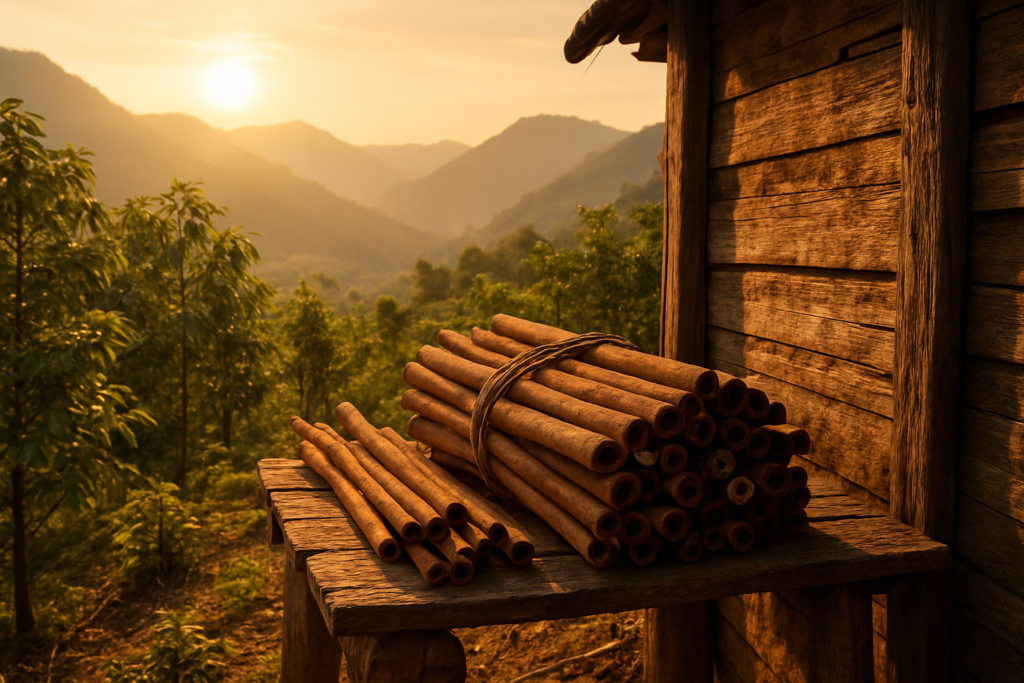
As I write this, the scent of cinnamon is dancing in the cool mountain air right here in Lao Cai. We’re smack in the middle of our autumn harvest, the time of year when our cinnamon trees are at their most generous, offering us bark rich in oil and flavor. You know, those Saigon cinnamon benefits that everyone talks about? This is when they truly come alive, thanks to the higher oil content in the bark harvested now.
Why is Autumn Harvest Special?
The autumn months of August and September are bustling on the farm. This is the season when the cinnamon bark, also known as cay vang xanh or the ‘green gold tree’ by locals, reaches its peak quality. The oil content shoots up to a robust 3-5%, giving the cinnamon that signature punch of spice and sweetness. I won’t pretend I knew this when I started, but the difference in flavor compared to other times of the year is unmistakable.
What are Saigon Cinnamon Benefits?
To start with, Saigon cinnamon is not just about taste (though that’s a major part!). It’s loaded with antioxidants, has anti-inflammatory properties, and even helps in reducing blood sugar levels. Imagine savouring a piece of our Vietnamese Cassia Sticks (Whole Quills) and knowing it’s doing wonders for your health. And what’s more, during this season, the benefits are even more pronounced, thanks to the enriched oil content.
How Farmers Prepare for Harvest
So, what’s happening on the farms this month? Picture this: curved knives gleaming as farmers skillfully peel the bark from the trees. The sun, though gentle in this autumn coolness, is still strong enough to dry the bark on bamboo racks within 3 to 7 days. It’s a rhythmic dance of nature and tradition, perfected over nearly 200 years in Xuan Ai Commune, the birthplace of cinnamon farming in Vietnam.
2 Unexpected Comparisons: Spring vs. Autumn Cinnamon
But how does autumn cinnamon compare to its spring counterpart? Spring harvest, from February to March, yields a milder and less pungent bark. It has its own charm, but if you’re after that rich, spicy aroma that warms your soul, autumn is the winner. The higher oil content this season is the key to unlocking the full spectrum of Saigon cinnamon benefits, making it more effective for culinary and medicinal uses.
5 Ways Weather Impacts Our Harvest
As I stand here in the fields, the weather is a gentle reminder of how closely our lives are tied to nature’s whims. Here are five ways our cinnamon is shaped by the climate:
- The cool mountain air at altitudes of 200 to 1000 meters creates the perfect growing conditions.
- Rich, fertile soil feeds our trees, nurturing them from seedlings to majestic giants.
- Differing temperatures between day and night enhance the oil production in the bark.
- Seasonal rains soften the soil, making it easier to plant and nurture young trees.
- The sun’s warmth dries the harvested bark rich in oils, readying it for market.
Each element plays a part in making our cinnamon what it is today: a treasured spice and a testament to the wisdom shared by the Dao ethnic people, the first planters here.
Reflecting on Our Story
Understanding the Saigon cinnamon benefits is one thing, but experiencing the process from the field to your kitchen shelf is another. This season, as we labor amidst the rustling cinnamon leaves, I’m reminded of our story—a tale woven with threads of tradition, passion, and community. And isn’t it fascinating how something as simple as cinnamon can hold such depth and offer so much joy?
For me, every piece of bark peeled and every drop of oil distilled represents more than just a product. It’s a slice of our history, a celebration of the here and now, and a promise for the future. Embrace the autumn harvest with us and discover the full spectrum of Saigon cinnamon benefits. It’s a spice, a healer, and a storyteller, all rolled into one.