

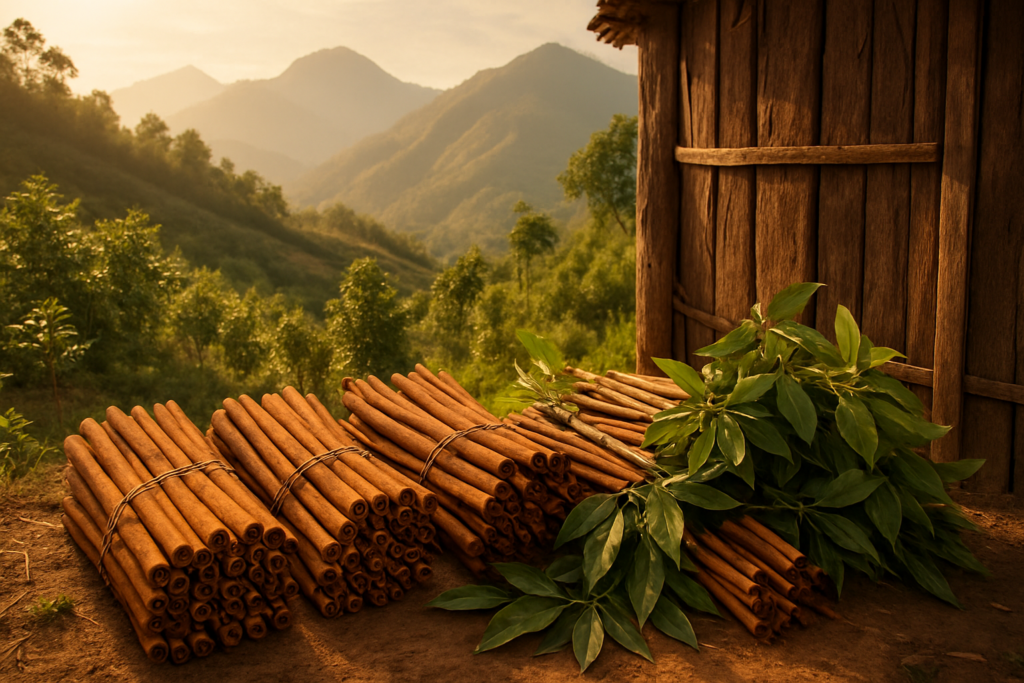
Picture this: a crisp autumn breeze carrying the warm, sweet scent of cinnamon through the valleys of Lao Cai. The earth underneath reflects hues of golden and brown as the mighty “cay vang xanh” prepares for its seasonal harvest. For those of us nurturing this cherished crop, these weeks are all about rhythm and patience.
Why Now? The Special Time of Year for Vietnamese Cinnamon
So, what is Vietnamese cinnamon? It’s more than just a spice; it’s the heart of our work this time of year. As August and September roll in, we embark on our autumn harvest — the season when our cinnamon bark reaches its peak oil content. Here in Xuan Ai Commune, this period is crucial. The higher oil content translates to a richer flavor and aroma. It’s the kind of warmth you can almost taste from the air. Quite remarkable.
Understanding the Cinnamon Harvest: A Labor of Love
Harvesting cinnamon requires a mix of skill, weather awareness, and the right tools. We use curved knives to carefully peel the bark, ensuring that the trees remain healthy for future harvests. This process isn’t as easy as it sounds. I won’t pretend I knew this when I started. But with hands-on experience and guidance from local experts, I’ve learned the ropes.
Post-harvest, the bark is laid on bamboo racks to sun-dry for 3-7 days. During this time, the sun works its magic, enhancing the cinnamon’s natural oils. Once dried, we sort the bark, utilizing every part. The trunk bark becomes Vietnamese Cassia Sticks, branches are split, and scraps ground into powder. Even the leaves have their purpose — distilled into a fragrant essential oil.
How Weather Shapes the Quality of Vietnamese Cinnamon
The climate in Lao Cai plays a pivotal role in our cinnamon’s distinctive characteristics. Positioned at an altitude ranging from 200 to 1000 meters, our region enjoys a cool climate perfect for this spice. Autumn rains soften the tree trunks, making the bark easier to peel. Additionally, the rich, fertile soil nourishes our trees, helping them thrive and produce cinnamon of unmatched quality.
As the cold sets in, the cinnamon trees prepare for their rest, accumulating energy for the growth season. It’s fascinating how nature orchestrates these cycles. Each year, we follow its lead, adapting our practices to ensure the best possible yield.
Why Vietnamese Cinnamon? 3 Reasons It’s Unique
1. **History and Tradition:** Understanding what is Vietnamese cinnamon requires a nod to its history. Xuan Ai Commune is the birthplace of cinnamon farming in Vietnam, with nearly 200 years of tradition. The Dao ethnic people were the first planters, carving out a legacy that we continue today.
2. **Sustainable Practices:** Our farming methods are rooted in sustainability. With over 6,000 hectares of cinnamon forest, including 2,000 certified organic hectares, we ensure that we’re not just taking from the land but also giving back.
3. **Fair Pricing:** Selling directly, without middlemen, means our farmers receive fair compensation for their hard work. It’s a simple but effective way of ensuring everyone benefits, maintaining the integrity of both the community and the product.
The Versatility of Vietnamese Cinnamon
By now, you might wonder how this beloved spice fits into your pantry. Well, Vietnamese cinnamon isn’t just for desserts. Its robust flavor and aroma make it a favorite in savory dishes, too. The next time you’re in the mood for something unique, consider adding a touch of our cinnamon to your tea, coffee, or even a savory stew.
Cinnamon is more than a part of our culture; it’s a way of connecting with the land and our community. If you’re curious about how our story unfolds year after year, feel free to read more on our story.
So, what is Vietnamese cinnamon? It’s the embodiment of heritage, hard work, and the unique mountain landscape of Northwest Vietnam. As we savor the autumn harvest, we’re reminded of the cycles of nature and the enduring spirit of our community. When you choose Vietnamese cinnamon, you’re not just choosing a spice; you’re embracing a centuries-old tradition.