

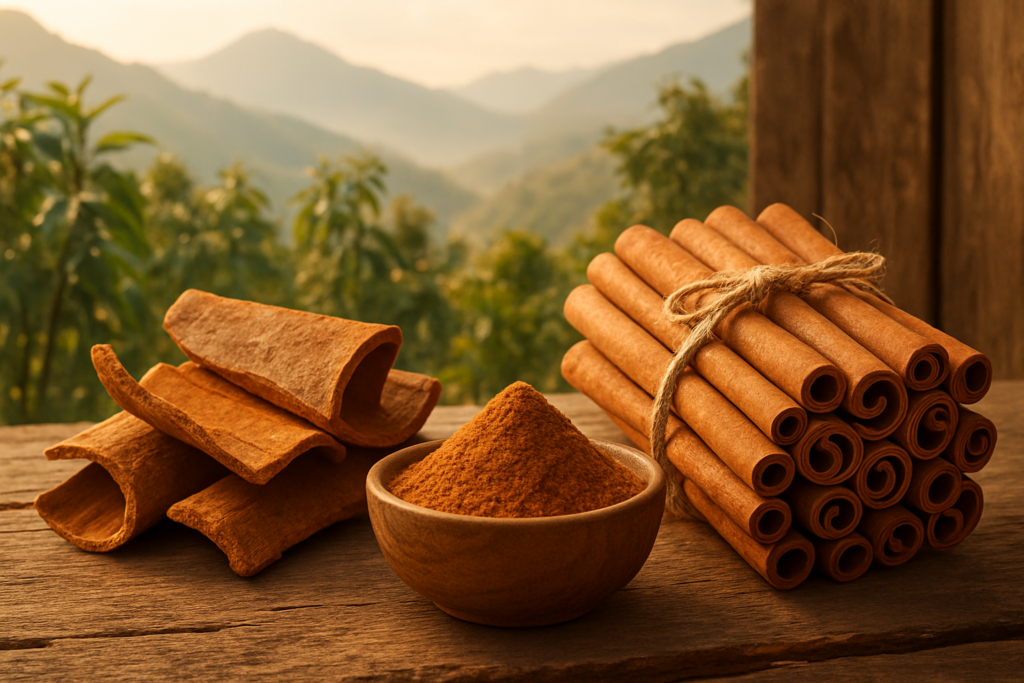
Most people think cinnamon is just cinnamon, but actually, there’s a world of difference between Vietnamese cinnamon and the regular kind you find on most supermarket shelves. As someone who has spent my entire life nurturing these magical ‘cay vang xanh’ (green gold trees) in the lush mountains of Xuan Ai Commune, I’m thrilled to share what truly sets Vietnamese cinnamon apart. Let’s unravel the myths and reveal the authentic flavor that has captivated generations.
What’s the Big Deal About Vietnamese Cinnamon?
Why does Vietnamese cinnamon earn such high praise? It’s all about the oil content and the unique environment where it’s grown. Our cinnamon, reaching its peak quality between 15-25 years of age, boasts an oil content of 3-5%. This is a fragrant explosion, with hints of vanilla and a fiery warmth unmistakably different from the far milder regular cinnamon.
✅ Truth
Vietnamese cinnamon has a higher oil content and richer flavor, cultivated over decades in the cool, rich soils of Vietnam’s highlands.
❌ Myth
All cinnamon tastes the same and has the same quality, regardless of where or how it is grown.
Is Vietnamese Cinnamon Really Healthier?
Look, health benefits often start with nature’s quality. And in Vietnamese cinnamon vs regular cinnamon, ours often wins due to its purer oil concentration and organic farming methods. (I’ll admit, it’s not just nature at play—it involves years of traditional farming knowledge passed down by the Dao ethnic people, who first planted cinnamon on our lands.) Our cinnamon is grown in certified organic environments, ensuring a purer, higher-quality spice that many believe contributes to better health outcomes.
How Do Growing Conditions Matter?
Honestly, the environment is like a hidden character in the story of our cinnamon. At altitudes of 200-1000 meters, with a cool climate and nutrient-rich soil, our cinnamon develops its distinct profile. Regular cinnamon, often grown in less favorable conditions, just can’t compete. The care taken from year 1 to year 25 (yes, it’s a long commitment!) is reflected in every curl of bark and drop of essential oil. And the flavor, whether in Vietnamese Cassia Sticks or other forms, is unparalleled.
3 Key Differences: Vietnamese Cinnamon vs Regular Cinnamon
- Age and Harvest: Vietnamese cinnamon is harvested at its peak maturity, 15-25 years, unlike regular cinnamon, which is often harvested more prematurely.
- Flavor and Aroma: The flavor is richer and more complex due to the higher oil content, providing both sweetness and heat.
- Environmental Impact: Our sustainable farming methods respect and preserve the land, ensuring future generations can also enjoy this ‘cay hanh phuc’ (happiness tree).
But perhaps the most compelling difference lies in our commitment to ethical practices—selling directly to give farmers fair prices, as we shared in our story. It’s a relationship with the land and community that goes beyond mere farming.
Why Choose Vietnamese Cinnamon?
In the end, when you compare Vietnamese cinnamon vs regular cinnamon, the choice becomes clear—not just for flavor but for quality, tradition, and sustainability. Every spice stick, whether gently floating in your tea or adding that essential kick to a dish, carries with it the care and history of our land. So next time you savor that aromatic burst, remember it’s not just any cinnamon; it’s a taste of Vietnam’s heritage.