

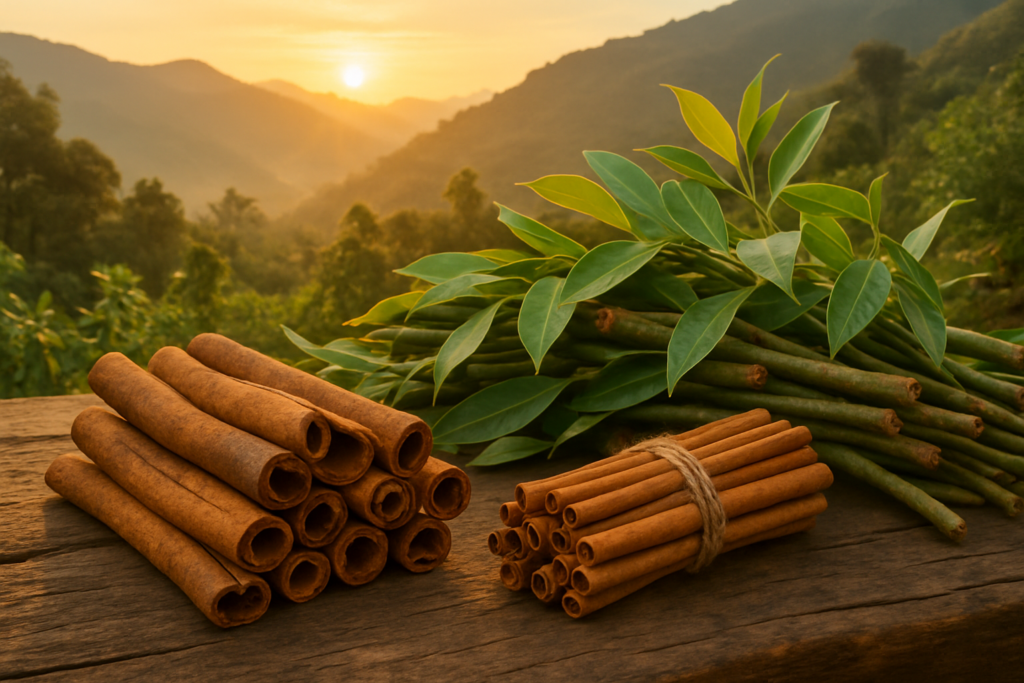
When you’re a young cinnamon farmer from Lao Cai Province, like me, the differences between Saigon and Ceylon cinnamon are more than just academic. They’re personal. Understanding these differences is key; for one, it helps us tell the true value of what we’re growing on our story. So let’s explore this fascinating topic: Saigon vs Ceylon cinnamon.
1. Flavor Intensity
Cinnamon isn’t just cinnamon. Saigon cinnamon packs an intense punch compared to the milder Ceylon. I remember the first time I tasted our cinnamon in Saigon; it was like a sweet explosion on my tongue! Ceylon cinnamon, often described as more subtle and citrusy, lacks the robust kick that Saigon cinnamon offers. This intensity is due to higher oil content in Saigon cinnamon, which can reach up to 5% at peak harvest years. If you want cinnamon that makes its presence known, Saigon is the way to go.
2. Which Has Better Health Benefits?
Look, both types have proven health benefits, but they’re not created equal. Saigon cinnamon has higher coumarin levels, which can be both a blessing and a curse. It’s great for enhancing heart health but should be consumed in moderation. Ceylon, with negligible coumarin, is often considered the “healthier” choice for everyday use. However, don’t let this overshadow the fact that Saigon cinnamon’s intense flavor allows for lesser amounts, making it equally safe if used wisely.
3. Farming Tradition: Saigon Cinnamon Beats Ceylon
You might think that Ceylon’s ancient roots would give it an edge, but think again. The heritage of Saigon cinnamon runs almost 200 years deep in Xuan Ai Commune, making it as much a part of me as it is of the land. This lineage is evident in our meticulous farming techniques—from planting the ‘cay vang xanh’ to the art of harvesting. The history reflects not only in flavor but also in the respect we afford our environment, contributing to the 2,000 hectares of certified organic cinnamon.
4. How Is Harvesting Different?
Harvesting methods differ significantly between the two. Saigon cinnamon involves peeling the bark with curved knives and sun-drying it for several days on bamboo racks. Every piece—bark, branch, leaf—is used, ensuring nothing goes to waste. While Ceylon’s harvesting is a similar process, it doesn’t involve the same level of artistry or tradition. The autumn harvest for Saigon is particularly rewarding, yielding higher oil content, which makes our Vietnamese Cassia Sticks (Whole Quills) exceptionally aromatic.
5. Availability: Which is Easier to Find?
Finding Saigon cinnamon can sometimes be a treasure hunt, mainly because it’s less commonly exported than Ceylon. Our Saigon cinnamon is sold directly without middlemen, ensuring fair pricing for farmers. Ceylon cinnamon, often referred to as “true cinnamon”, is more widespread because of broader international trade channels. This makes Saigon a specialty item, cherished for its rarity and unparalleled flavor, much like discovering a family secret recipe that never fails to impress.
Understanding the nuances of Saigon vs Ceylon cinnamon isn’t just about flavor; it’s about heritage, health, and integrity. The Saigon cinnamon grown in our farms here in Lao Cai is more than a spice—it’s a symbol of our culture and dedication. From intense flavor to rich traditions, Saigon cinnamon holds a unique place in our hearts. If you’re curious, our our story awaits your discovery. I hope you can taste the love and care in each stick.