

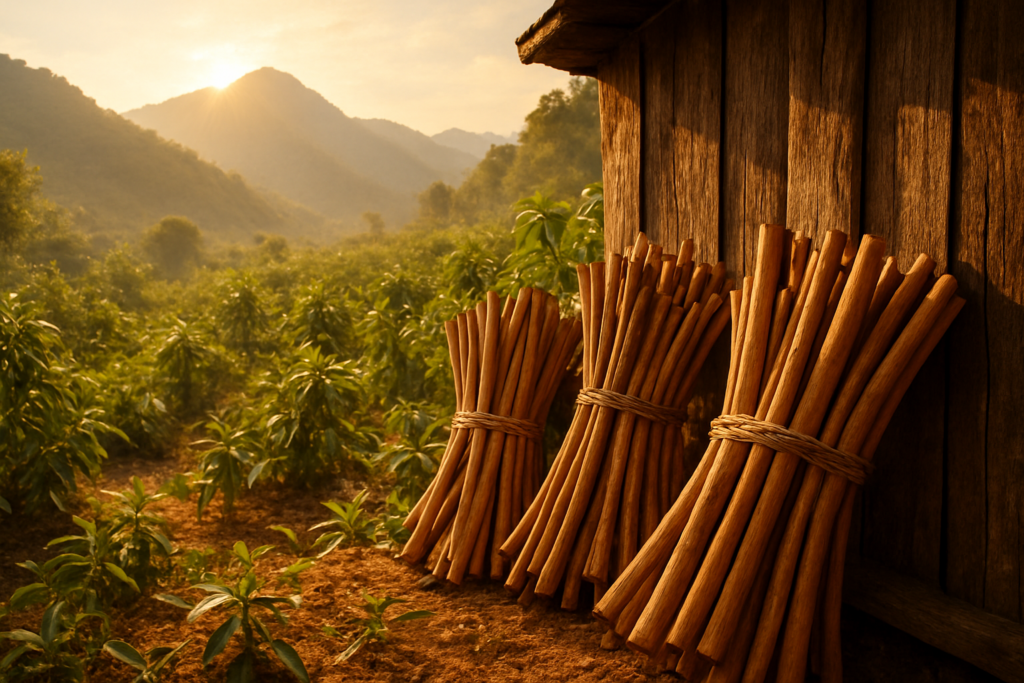
Ever wondered why spices from Vietnam have that unforgettable aroma and flavor? As a young farmer from Lao Cai, let me share with you the magic behind organic spice farming in Vietnam. This list will journey through history, practices, and some personal insights that even I didn’t know when I first started.
1. Why is Xuan Ai Commune Ground Zero?
Organic spice farming in Vietnam finds its roots in Xuan Ai Commune, the birthplace of cinnamon farming. Nearly two centuries of tradition make this region unique. I grew up hearing stories of the first Dao ethnic people planting the initial saplings. Imagine planting something this year and waiting decades to see its true potential. The tradition lies deep, and the knowledge is passed through generations. Our environment, with over 6,000 hectares of cinnamon forest, is the perfect setting for this age-old practice.
2. The Secret Behind the ‘Green Gold Tree’ Price
Cinnamon, or ‘cay vang xanh’, doesn’t just grow on trees. Okay, technically it does, but its value comes from its careful cultivation. Over 2,000 hectares are certified organic, ensuring the highest quality. Honestly, I won’t pretend I knew this when I started, but there’s a reason why locals call it the happiness tree. By selling directly, we cut out the middlemen, offering a fair price that benefits both the farmers and consumers. Our story is deeply intertwined with this practice.
3. What is Unique about Vietnam’s Climate for Spices?
You might not expect the cool climate and mountainous terrain to be ideal for spices, but they are perfect for our cinnamon. The altitude in Xuan Ai ranges from 200 to 1000 meters, contributing to the rich oil content found in our products. Years 1-5 are for planting, and nurturing followed by the first harvests of leaves. By year 15, the bark reaches peak quality. This unique environment results in exceptional spices that are truly a class apart.
4. How Seasons Affect Spice Harvesting
Seasons play a crucial role in organic spice farming in Vietnam. The autumn harvest (August-September) offers cinnamon with higher oil content. On the other hand, the spring harvest (February-March) yields milder spices. Timing is everything. I’ve learned that each season adds a unique twist to the flavor profile, which only enhances the end product. When you enjoy our Vietnamese Cassia Sticks, you taste the seasons of Vietnam.
5. How Does Organic Certification Impact Quality?
Our organic certification isn’t just a label; it’s a commitment to quality. Certified organic farms are monitored rigorously to ensure no harmful chemicals are used. This guarantees that what reaches your table is pure and uncontaminated. The impact of this certification is profound, as it sets our spices apart in the global market. I’ve seen firsthand how these practices preserve our soil, our health, and our future.
Exploring organic spice farming in Vietnam reveals a blend of tradition, passion, and unique environmental benefits. Each aspect—from the age-old practices of the Dao people to the meticulous care in harvesting—contributes to the distinct flavor profile of Vietnamese spices. Whether it’s our climate, the direct sales model, or the rigorous certifications, every detail matters. I invite you to taste the difference and discover the essence of Vietnam through our spices.