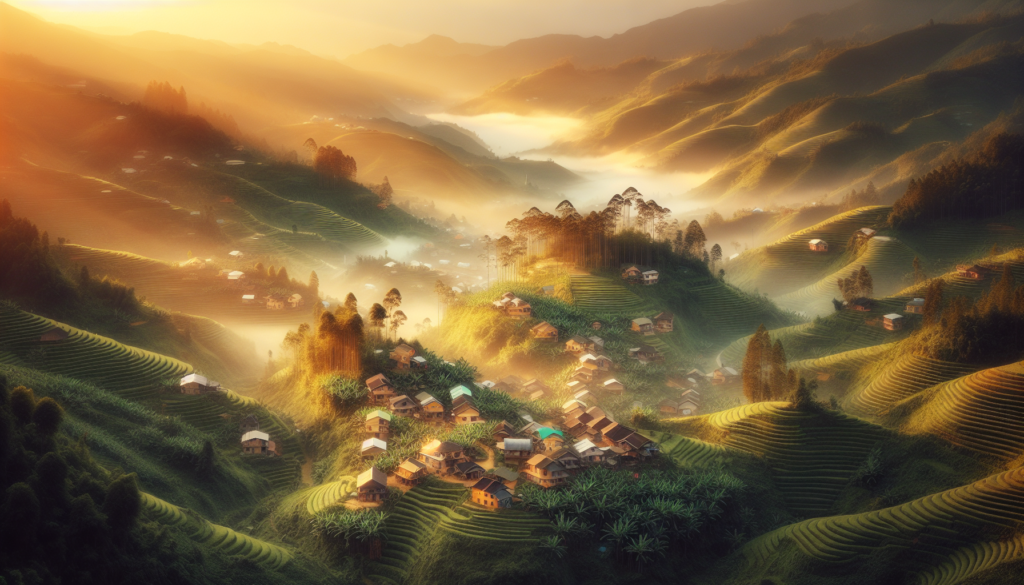
Growing up in a cinnamon village in Vietnam shaped everything about who I am today. In the remote mountains of Northwest Vietnam, our small community has cultivated cinnamon for generations. This is the story of my childhood in one of Vietnam’s most important cinnamon-producing regions.
I was born in 1998 in Phu Son, a small village in Lao Cai Province, Northwest Vietnam. In every direction from our house, the hills are covered in cinnamon trees. The air always carries that warm, sweet scent — especially after rain.
Cinnamon was never exotic to us. It was simply life. Every family in our village had cinnamon trees. It was how we built homes, bought food, and sent children to school.
Collecting Cinnamon as a Child
My earliest cinnamon memories start around age seven or eight. After school, my job was to take the family buffalo out to graze on the hillside. Walking the dirt paths between the hills, I would pick up cinnamon seeds that had fallen on the ground and stuff them into my pockets.
As I got older, I started climbing the trees themselves to prune small branches — what we call “quế chi tiêm” in Vietnamese. I would tie them into bundles and sell them to local collectors. The money was not much — enough for a notebook and some pens — but for a village kid with no pocket money, it felt like a small fortune.
Looking back, that was my first lesson in business, though I did not know it at the time: find something of value, do the work to gather it, and find someone willing to buy.
Learning the Hard Work
By twelve or thirteen, I was helping with the real labor. Planting cinnamon is nothing like growing vegetables in a garden. It is slow, physically demanding work that requires extraordinary patience.
It begins with the seeds. Cinnamon trees produce small fruits containing seeds that we collect, dry, and sow into individual soil bags — “bầu” in Vietnamese. Each seedling gets its own bag of earth, packed by hand.
For the next one to two years, you tend them carefully — watering, shielding from harsh sun or heavy rain — until they are strong enough to survive on a mountainside.
Then comes the hardest part: carrying hundreds of seedlings up steep hillsides and planting them one by one. No roads, no tractors. Just you, a hoe, and the weight on your back.
After all that effort, you wait. A minimum of seven years before the bark is ready to harvest. Seven years.
The Ancient Trees
Some of our cinnamon trees were planted by my grandparents or even their parents. A few are over twenty-five years old — their trunks so wide I cannot reach around them.
These ancient trees produce the most valuable bark: thick, deeply aromatic, saturated with essential oil. But old bark is also the hardest to peel — it demands both strength and skill.
When you strip the bark from one of these old trees, the fragrance is unforgettable. Sweet, warm, and intense enough to fill the entire hillside.
Nothing Goes to Waste
One thing I have always loved about cinnamon farming is that every part of the tree has a purpose:
- Bark — processed into sticks, powder, and split bark for use as spice, in traditional medicine, and in cosmetics
- Leaves — boiled to extract cinnamon essential oil, which has its own market
- Trunk — used as firewood or construction material. Many homes in our village were built partly with cinnamon wood
- Small branches — cut into short pieces and sold as “quế chi tiêm” (cinnamon twig cuts), used in traditional medicine for improving circulation, relieving cold symptoms, and warming the body
Nothing is discarded. The entire tree serves the community. That is the quiet beauty of cinnamon farming.