

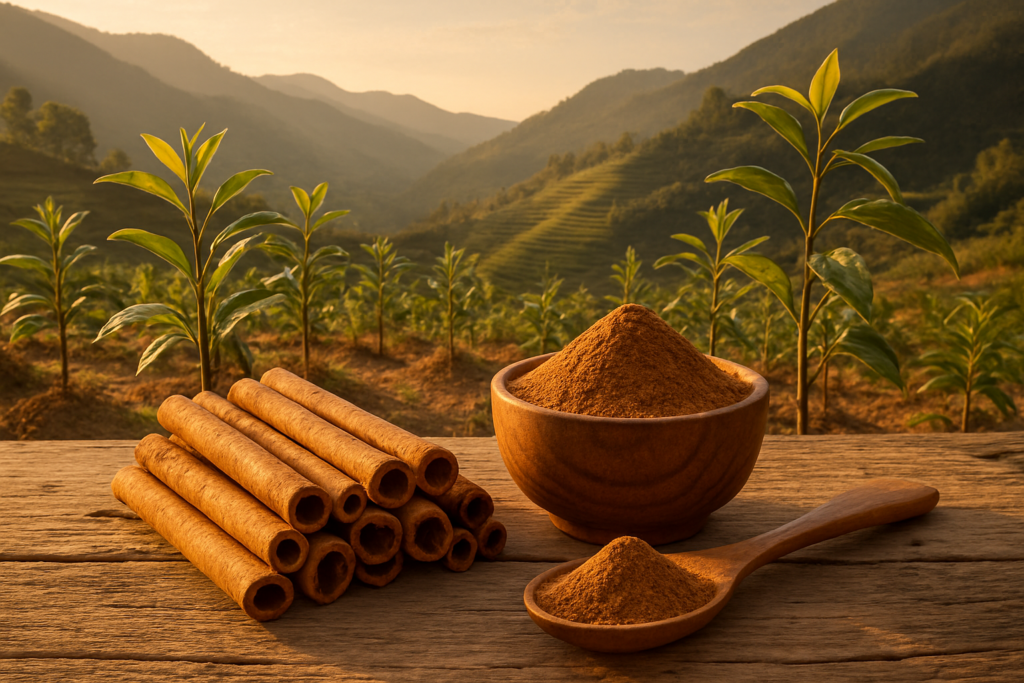
The crisp air is filled with the aroma of freshly peeled cinnamon bark. The sky is a sweeping blue canvas, and here we are, deep in our cinnamon forest in Xuan Ai Commune, preparing for the busy harvest season. As I walk among these tall, proud trees, I think to myself, there’s something magical about this time of year — when the air hums with anticipation, and the scent of cinnamon lingers in every breath.
What’s the Difference: Cinnamon Bark vs Cinnamon Powder?
When you visit, you’ll see us carefully peeling the bark with our beloved curved knives, a tool that has been in our family for generations. It’s fascinating — how this bark can later transform into the Vietnamese Cassia Powder that spices up kitchens worldwide. But what’s truly captivating is understanding the difference between cinnamon bark vs cinnamon powder. The bark is harvested meticulously and dried to perfection on bamboo racks under the warm sun. This raw, hard bark captures the very essence of cinnamon, while the powder, a fine ground form of the bark, carries convenience and deep, consistent flavors for your culinary creations.
Why This Time? Harvest Season in Lao Cai
Autumn is special here in Lao Cai. The temperatures dip just enough to make you pull on a light jacket, while the cinnamon trees, standing at altitudes between 200 to 1000 meters, thrive in this cool, yet rich climate. Farmers, like my family and neighbors, are busy harvesting. We’re peeling bark, drying it in the sun from 3 to 7 days, ensuring its rich oil content is preserved. This is crucial, especially during the autumn harvest from August to September, known for yielding bark with higher oil content. The work is intensive, but the rewards — both the scents and the community bonds — are unmatched during this time.
How We Transform Bark Into Powder
Curious about how bark morphs into powder? Let me take you through the process. Once the bark is dried, it’s sorted based on quality. The finest bark is ground into a fine, aromatic powder that you can sprinkle on your morning oatmeal or use in your favorite baking recipes. The lesser grades? They find their purpose too, being used for oil extraction or ground into powder for different blends. Nothing goes to waste. Each piece — from trunk to twig — has a role, ensuring sustainability and maximizing the value of our harvest. And if you’re interested, you can learn more about our commitment to fair practices on our story page.
5 Fascinating Facts About Our Cinnamon Harvest
- Year 8-10 is when we start seeing bark ready for harvesting, but peak quality comes around years 15-25, with up to 5% oil content.
- Every bit of the tree is used: trunk bark becomes sticks, branch bark is split, and even the scraps find life as powder or essential oil.
- The Dao ethnic people, who first planted these trees, still guide us today with their wisdom and traditions.
- With over 6,000 hectares of cinnamon forest, including 2,000 hectares certified organic, we’re proud stewards of this green gold tree.
- The autumn harvest, with its rich oils, contrasts with the milder, more fragrant spring harvest. Each offering unique qualities to our cinnamon products.
Choosing Between Bark and Powder
Deciding between cinnamon bark vs cinnamon powder often depends on your culinary needs. The bark is perfect for infusing deep flavors in stews or teas, releasing its rich oils over time. Powder, on the other hand, offers immediate warmth and spice, ideal for baking or a quick sprinkle over cappuccino. As we wrap up another fulfilling day of harvest, I’m reminded that whether it’s bark or powder, both forms carry the soul of our land — a heritage nearly 200 years in the making. And as you hold a piece of Xuan Ai in your kitchen, know that you’re sharing in the history and happiness of the ‘cay hanh phuc.’